Best Nebulizing Diffusers 2026: Honest Comparison
Nebulizing diffusers are the espresso machines of aromatherapy: pure oil, no water, maximum intensity. Here is how the category works, which units lead it in 2026, and an honest map of who should buy a nebulizer and who is better served by a humble ultrasonic.
Nebulizer vs Ultrasonic: The Honest Trade-Off Table
| Factor | Nebulizing | Ultrasonic |
|---|---|---|
| Aroma strength and purity | Full, undiluted oil profile | Diluted by water mist |
| Water needed | None | Tank required, refills and occasional gunk |
| Added humidity | None (good for damp homes, wood furniture) | Yes (a plus in dry climates) |
| Noise | Soft air-pump pulse | Hum plus water gurgle |
| Oil consumption | Higher: you diffuse pure oil | Lower: a few drops per tank |
| Maintenance | Alcohol rinse every week or two | Tank cleaning to prevent buildup |
| Therapeutic use | The choice of serious aromatherapy | Ambient scent and gentle humidification |
The Picks for 2026
1. Organic Aromas Raindrop 3.0: Best Overall
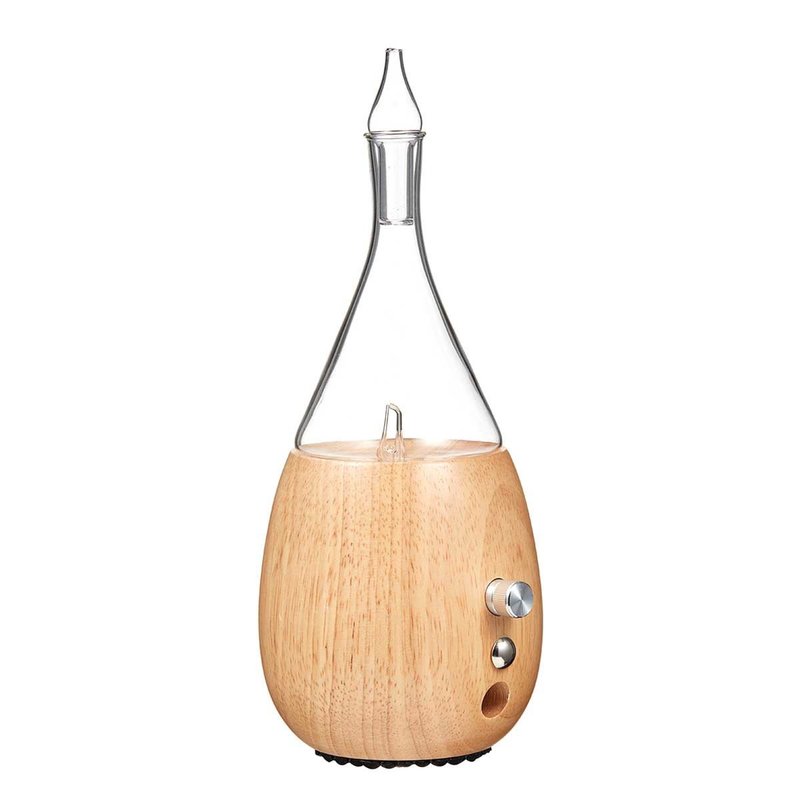
The flagship of the category and the unit others get compared to. Hand-blown glass atomizer on a hardwood base, adjustable intensity, intermittent cycle with automatic shutoff, near-silent pump, and the magnetic breakaway cord that protects the glass from snagged-cable accidents. The independent lab GearLab rates it as their favorite nebulizing model in their aromatherapy diffuser testing. Full breakdown in our Raindrop 3.0 review.
Raindrop 3.0 at Organic Aromas →2. Organic Aromas Raindrop 2.0: Best Value Classic
The same glass-and-wood construction and the same nebulizing performance as the 3.0, controlled by a simple rotary knob instead of touch controls, without the magnetic cord and lighting refinements. If you want the reference nebulizing experience at the friendlier end of the range, this is it.
Raindrop 2.0 at Organic Aromas →3. Organic Aromas Mobile-Mini: Best for Travel and Cars
A rechargeable, waterless nebulizer scaled down to cup-holder size. Same pure-oil principle, portable format: car commutes, desks, hotel rooms. It will not scent a living room like a Raindrop, and it is not trying to.
Mobile-Mini at Organic Aromas →Owner tip: glass atomizers are replaceable. If a reservoir ever breaks, the replacement glass set restores the unit for a fraction of a new diffuser.
Who Should Not Buy a Nebulizer
Honesty requires the reverse list. Skip the nebulizer if you mainly want a bedside humidifier with a hint of scent, if you diffuse many hours a day and want minimal oil spend, or if your home situation rules out strong diffusion: birds (never diffuse around birds), a cat in a small apartment, infants, or anyone with asthma or COPD in the household. Airborne oil concentration is the whole point of a nebulizer, and there are homes where that point works against you. Our pet-safe diffusing guide covers the animal side in detail, and our diffuser type guide maps the alternatives.
What to Diffuse in It
Nebulizers reward good oil, because you smell everything. Start with the classics: lavender(paid link) for evenings, eucalyptus(paid link) and peppermint(paid link) for clear-headed mornings, cedarwood(paid link) for depth. Recipes and ratios live in our 10 best diffuser blends, and remember to treat drop counts as ratios, since there is no water tank.
Frequently Asked Questions
A diffuser that atomizes pure essential oil into a microfine aerosol using pressurized air, with no water and no heat. It delivers the complete, undiluted aroma and is considered the strongest and purest diffusion method available for home aromatherapy.
Used correctly, yes: intermittent sessions of 30 to 60 minutes in ventilated rooms, following the same guidance as any strong diffusion. Extra caution applies around infants, pets (especially cats and birds), and anyone with asthma or COPD, precisely because nebulizers put more oil into the air than other types.
For healthy adults, intermittent diffusion in ventilated spaces is generally well tolerated. Continuous exposure in closed rooms can irritate airways, and people with asthma, COPD, or scent sensitivity should be cautious with any diffusion and avoid strong nebulized output. When in doubt, shorter sessions and more ventilation.
Nebulizers win on aroma strength, purity, and therapeutic intensity; ultrasonics win on running cost, humidification, and gadget features. Serious aromatherapy leans nebulizer, ambient background scent leans ultrasonic.
The core components cost more: a hand-blown or precision glass atomizer and a real air pump instead of a vibrating plate and a plastic tank. You are paying for the mechanism that makes waterless pure-oil diffusion possible.