🍊 Bergamot Oil: Uses, Benefits and How to Use It
Bergamot is the bright, citrus-floral oil behind Earl Grey tea. It is best known as an uplifting, mood-supporting oil, and it is one of the more pleasant essential oils to diffuse. Here is what it is good for, how to use it, and one important safety point about sun exposure.
What bergamot oil is good for
Mood and stress. Bergamot is widely used in aromatherapy to lift mood and ease everyday stress. Several small studies report reduced stress and improved mood after inhaling bergamot, though it should be seen as a complementary aid rather than a treatment.
Relaxation blends. It pairs beautifully with lavender and frankincense for a calming evening diffuser blend.
Skin and freshness. Diluted, it is traditionally used in skincare for oily or blemish-prone skin, and it makes a fresh natural room scent.
How to use bergamot oil
Diffuser: 3 to 4 drops in a 300ml diffuser. Try 3 drops bergamot + 2 drops lavender to unwind.
Topical: dilute to about 2% in a carrier oil (around 12 drops per 30ml). Always patch test first.
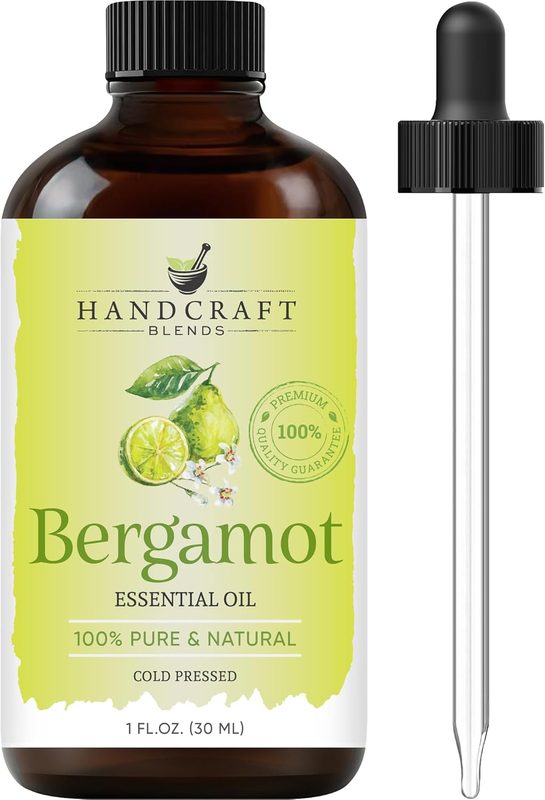
Our pick: Handcraft Blends Bergamot
A bright, versatile citrus oil that is excellent for mood and relaxing diffuser blends. Use it freely in a diffuser, and mind the sun-exposure rule for topical use.
Check current price on Amazon(paid link)Frequently Asked Questions
Diluted bergamot can be used on skin, but regular bergamot is phototoxic. Avoid sun exposure on treated skin for 12 to 18 hours, or use a bergaptene-free (FCF) version for daytime topical use. Always patch test first.
Bergamot has a bright, fresh citrus scent with a soft floral, slightly spicy edge. It is the aroma that gives Earl Grey tea its distinctive character.
Bergamot is one of the most popular oils for mood and stress in aromatherapy, and some small studies support a calming, mood-lifting effect when inhaled. It is a helpful complement to, not a replacement for, professional care.