Frankincense Oil: 8 Evidence-Based Uses and How to Apply It
Frankincense is one of the oldest therapeutic substances known to humanity - and one of the most scientifically interesting essential oils. Here are its 8 best-evidenced uses.
What Is Frankincense Oil?
Frankincense (Boswellia sacra or B. carterii) is one of the oldest and most prized aromatic resins in human history. The essential oil is steam-distilled from the resin of Boswellia trees, native to Oman, Somalia, and Ethiopia. Its primary bioactives include boswellic acids, alpha-pinene, and limonene - compounds with documented anti-inflammatory, antimicrobial, and potential anti-tumor properties in cell studies.
In aromatherapy, frankincense is celebrated for its deeply grounding, meditative quality. Its warm, resinous, slightly citrusy scent promotes a state of calm alertness unlike any other essential oil.
Top 8 Uses for Frankincense Oil
1. Anti-Aging Skincare
Frankincense is one of the most evidence-supported essential oils for skin aging. Boswellic acids inhibit enzymes that break down skin matrix proteins (similar mechanism to retinol, but milder). Dilute 5 drops in 30ml jojoba oil and apply nightly. Expect improvement in fine lines and skin texture after 6-8 weeks.
2. Meditation and Mindfulness
The most historically documented use of frankincense. Diffuse during meditation, prayer, or yoga. Its neurological effect - incensole acetate activates ion channels in the brain that produce a sense of expansiveness and reduced anxiety - has been confirmed in animal studies and is biologically plausible in humans.
3. Immune Support Diffusing
Frankincense has documented antimicrobial properties against several respiratory pathogens. Diffuse during cold and flu season alongside eucalyptus or tea tree.
4. Scar and Stretch Mark Treatment
5 drops frankincense in 30ml rosehip carrier oil applied twice daily. The combination of boswellic acids and rosehip's vitamin A analogs supports cell turnover and collagen synthesis. Requires 8-12 weeks of consistent use.
5. Grief and Emotional Support
Traditional aromatherapy practice uses frankincense for processing difficult emotions. Modern neuroscience supports this - its grounding effect on the limbic system makes it useful for grief, loss, and emotional upheaval. Diffuse or apply diluted to wrists and chest.
6. Joint and Muscle Discomfort
Boswellic acids are among the most studied natural anti-inflammatory compounds. Topical application (5 drops in 10ml carrier) to affected joints twice daily provides meaningful local anti-inflammatory action. Used clinically in Germany for arthritis alongside conventional treatment.
7. Oral Hygiene
1 drop in a small cup of water as an antimicrobial mouthwash. Traditionally used across the Middle East as a natural oral hygiene agent. Spit out after 30 seconds - do not swallow.
8. Hair Scalp Conditioning
3 drops in a hair mask or scalp blend. Anti-inflammatory action reduces scalp inflammation that contributes to hair loss. Pairs well with rosemary and castor oil.
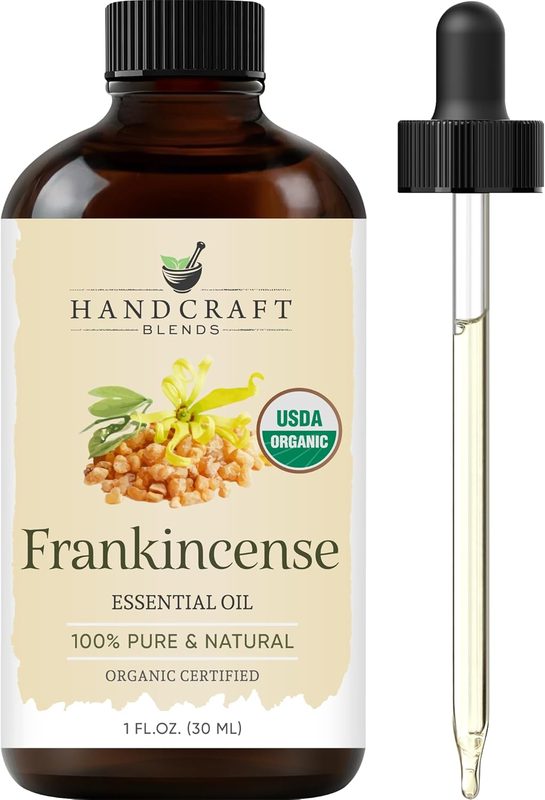
Frankincense vs Lavender: Which to Start With?
If you could only buy one essential oil, lavender is the more versatile starting point. If you want to invest in a higher-grade oil for skincare and meditation, frankincense is unmatched. Handcraft Blends offers both at excellent value.
Shop Handcraft Blends Frankincense →(paid link)Frequently Asked Questions
Frankincense is typically more expensive than lavender or tea tree because Boswellia trees are slow-growing and resin harvesting is labor-intensive. For skincare and meditation use specifically, the higher price is justified - its bioactives are genuinely unique and not replicated by cheaper oils. For general diffusing, lavender and eucalyptus provide better value.
Yes - at appropriate dilution (1-2% in a carrier oil like jojoba), frankincense is well-tolerated for daily facial use. It is non-photosensitizing and suitable for sensitive skin. Many users incorporate it into their nightly skincare routine.
Frankincense has a complex scent profile: warm, resinous, and balsamic with subtle citrusy and green top notes. It is notably less sweet than most florals and has a meditative, almost sacred quality that is difficult to describe until experienced. Most people find it deeply calming and pleasant.
Yes - frankincense and lavender are among the most complementary essential oils. The combination creates a deeply calming, grounding blend excellent for sleep, meditation, and evening skincare. A good diffuser ratio is 3 drops lavender + 2 drops frankincense.