Jojoba Oil for Skin: Benefits, Uses, and What Makes It Different
Jojoba oil is one of the most scientifically interesting carrier oils - and one of the most versatile for skincare. Here is why it works differently from every other oil, and how to use it.
Why Jojoba Oil Is Unique
Jojoba oil (Simmondsia chinensis) is technically not an oil at all - it is a liquid wax. This distinction matters enormously for skin application. Most plant oils are triglycerides (fatty acids bound to a glycerol backbone). Jojoba is composed almost entirely of wax esters - the same molecular structure as human sebum, the skin's natural oil.
This molecular similarity is why jojoba is exceptional for skincare:
- Skin recognizes it as familiar and absorbs it readily without the "greasy" feeling of heavier oils
- Oily skin may reduce its own sebum production because the skin's sebum receptors detect adequate oil levels
- It is highly stable - jojoba wax resists oxidation better than most plant oils, giving it a shelf life of 2-5 years
- It is non-comedogenic (0 on the comedogenic scale) and suitable for acne-prone skin
Key Skin Benefits (With Evidence)
| Benefit | Evidence | Application |
|---|---|---|
| Deep moisturization | Multiple clinical studies confirm barrier repair | Face and body as daily moisturizer |
| Sebum regulation | Documented in oily skin studies | Facial application for oily/combination skin |
| Anti-inflammatory | Simmondsins in jojoba reduce pro-inflammatory markers | Eczema, rosacea, inflamed skin |
| Wound healing support | Enhanced collagen synthesis documented in studies | Post-acne marks, minor cuts |
| Antioxidant protection | Vitamin E content provides free radical protection | Anti-aging facial use |
How to Use Jojoba Oil
As a Facial Moisturizer
Apply 2-4 drops to clean, slightly damp skin. Press gently into skin - don't rub aggressively. Use morning and/or evening. For oily skin: use alone. For dry or mature skin: layer under your regular moisturizer or mix in 1-2 drops of your preferred essential oil.
As a Carrier Oil for Essential Oil Blends
Jojoba is the best carrier for facial essential oil blends because of its skin compatibility and non-comedogenic profile. Standard dilution: 6 drops essential oil per 30ml jojoba for 1% concentration (facial use), or 12 drops per 30ml for 2% (body use).
As a Makeup Remover
Apply a few drops to a cotton pad and gently wipe away makeup - including waterproof mascara. Rinse with warm water or follow with a gentle cleanser. Less irritating than most commercial makeup removers.
For Dry Scalp and Dandruff
Massage 5-10 drops into the scalp before washing. Leave for 20-30 minutes then shampoo. Jojoba's antifungal and anti-inflammatory properties can help with dandruff and dry scalp without the heaviness of castor or coconut oil.
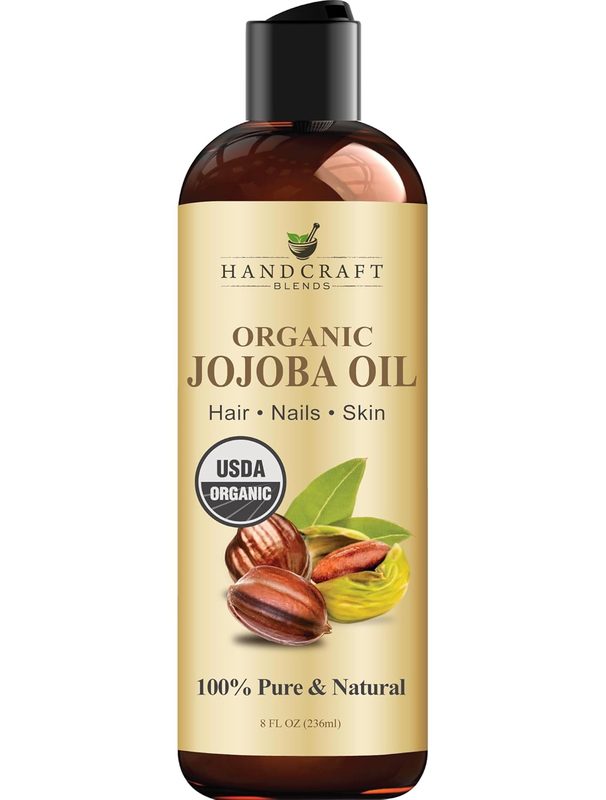
Our Pick for Jojoba Oil
Handcraft Blends Organic Jojoba Oil is cold-pressed and USDA organic - the two most important quality markers for jojoba in skincare. Note: check current availability on Amazon, as their jojoba occasionally sells out. See the product page below.
Shop Handcraft Blends Jojoba Oil →(paid link)Frequently Asked Questions
Jojoba oil is one of the few carrier oils genuinely suitable for all skin types. Its composition is unique - technically a liquid wax rather than a true oil - and its molecular structure closely resembles human sebum. This means oily skin recognizes it and reduces sebum production (the opposite of many carrier oils that trigger more oil production). It is non-comedogenic, non-allergenic, and stable, making it ideal for sensitive, acne-prone, dry, and combination skin.
No - jojoba oil is rated 0 on the comedogenic scale, meaning it does not clog pores. Unlike many plant oils, jojoba does not contain the triglycerides that typically clog pores. This makes it one of the safest carrier oils for facial use, even for acne-prone skin. It can actually help regulate sebum production over time.
Apply 2-4 drops to fingertips after cleansing and toning while skin is still slightly damp. Gently press (don't rub) into skin. Use morning and/or evening as a lightweight moisturizer or as a base for essential oil blends. For dry skin, layer under your regular moisturizer. For oily skin, use alone as a moisturizer - it is light enough to wear under makeup.
No - they are different oils with different properties. Jojoba is a liquid wax with a closer molecular resemblance to skin sebum, making it ideal for facial skincare and sebum regulation. Fractionated coconut oil is a highly refined coconut oil with a very light, fast-absorbing texture - better for body massage, hair applications, and diluting essential oils for skin. For facial use, jojoba is generally preferred.